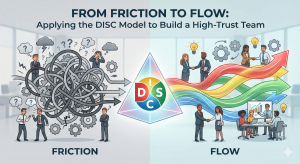
How Personality Assessments Create Harmony in Professional Environments
In today’s complex workplace, understanding what makes people tick isn’t just helpful—it’s essential. When teams struggle with communication breakdowns, conflict, or collaboration challenges, personality differences often lie at the heart of these issues. This is where tools like the DiSC® personality assessment have become invaluable for organizations looking to transform their culture and improve team performance.
The Foundation of DiSC®: Four Core Personality Dimensions
The DiSC® model organizes human behavior into four primary dimensions, each representing different tendencies and preferences:
- Dominance (D): Direct, results-oriented, strong-willed, and forceful
- Influence (i): Outgoing, enthusiastic, optimistic, and people-focused
- Steadiness (S): Gentle, accommodating, patient, and humble
- Conscientiousness (C): Analytical, reserved, precise, and systematic
These dimensions aren’t rigid boxes but rather a spectrum of tendencies. Most people have a primary style with elements of the others mixed in. The beauty of the DiSC® approach is its accessibility—the framework is intuitive enough that teams can quickly grasp and apply its insights.
Deeper Insights into DiSC® Personality Dimensions
While the four DiSC® dimensions provide a valuable framework, understanding the nuanced characteristics of each style helps teams appreciate the full spectrum of workplace behaviors and preferences:
Dominance (D): The Results-Driven Achiever
High-D individuals are naturally drawn to challenges and approach work with determination and decisiveness. They typically:
- Value efficiency and measurable outcomes above all else
- Communicate directly, often getting straight to the point
- Make quick decisions with confidence, even amid ambiguity
- Seek authority and opportunities to influence outcomes
- May appear impatient with processes they view as inefficient
- Respond well to challenges and competitive situations
Influence (i): The Enthusiastic Connector
Those with high-i tendencies bring energy and social connection to the workplace. They typically:
- Build wide networks and maintain numerous professional relationships
- Express themselves openly with animated communication
- Generate enthusiasm for projects and initiatives
- Make intuitive decisions based on what feels right
- Prefer collaborative environments over isolated work
- Excel at persuading others and building consensus
Steadiness (S): The Supportive Harmonizer
High-S team members provide stability and consistency to their environments. They typically:
- Demonstrate remarkable patience and listening skills
- Prefer established methods and predictable environments
- Consider how decisions will affect team harmony and stability
- Approach change cautiously, preferring gradual transitions
- Offer reliable follow-through and dependability
- Value genuine, authentic relationships in the workplace
Conscientiousness (C): The Thoughtful Analyzer
High-C individuals bring precision and analytical thinking to teams. They typically:
- Set high standards for quality and accuracy
- Approach problems with logical, systematic thinking
- Research thoroughly before making commitments
- Communicate precisely, with attention to specific details
- Question assumptions and seek evidence-based solutions
- Create systems and processes that ensure consistency
By recognizing these deeper characteristics, teams can move beyond simple categorization to truly appreciating the value each style brings to the workplace. This deeper understanding forms the foundation for meaningful adaptation and collaboration across different personality preferences.
Beyond Labels: Understanding DiSC® as Tendencies Rather Than Boxes
One of the most common misconceptions about personality assessments like DiSC® is that they “label” people – placing them in rigid boxes that limit their potential or oversimplify their complexity. This criticism deserves careful consideration, as it speaks to a fundamental misunderstanding of how DiSC® is designed to function in workplace settings.
Tendencies vs. Labels: The Critical Distinction
DiSC® doesn’t define who someone is – it illuminates how they tend to behave in professional contexts. These tendencies remain remarkably consistent over time, which is precisely what makes the framework so valuable. The analytical, detail-oriented colleague who prefers thorough research before making decisions will consistently demonstrate these preferences. Similarly, the enthusiastic team member who builds relationships effortlessly will bring that same energy to future projects.
Think of DiSC® not as a box that contains someone’s entire personality, but as a lens that helps bring certain consistent behavioral preferences into focus. These patterns help us understand and appreciate different approaches to work.
Speaking Different “Languages” in the Workplace
A helpful way to conceptualize DiSC® styles is to view them as different languages people naturally speak in professional settings:
- High-D individuals speak the language of results and action
- High-i colleagues communicate through enthusiasm and connection
- High-S team members express themselves through consistency and support
- High-C professionals articulate through precision and analysis
When we fail to recognize these different “languages,” we often try to interpret everyone’s behavior through our own preferred style – our native tongue. This creates unnecessary stress and misunderstanding. Imagine a high-C team member viewing a high-i colleague’s enthusiastic brainstorming as “unfocused” or a high-D leader seeing a high-S team member’s careful implementation as “unnecessarily slow.”
Breaking Free from Our Style’s Narrow Lens
Perhaps the greatest value of DiSC® is that it frees us from viewing workplace interactions solely through our own stylistic preferences. Without this framework, we naturally tend to:
- Assume others process information the way we do
- Expect others to communicate in our preferred style
- Judge approaches different from our own as somehow deficient
- Feel frustrated when others don’t respond as we would
DiSC® breaks this cycle by helping us recognize that different approaches aren’t wrong – they’re simply different. The high-D leader’s directness isn’t rudeness; it’s efficiency. The high-C team member’s questions aren’t resistance; they’re thoroughness. The high-i colleague’s stories aren’t time-wasting; they’re relationship-building. The high-S team member’s caution about change isn’t stubbornness; it’s thoughtfulness.
Embracing Complexity Within Consistency
While behavioral tendencies remain consistent, DiSC® acknowledges that all individuals are complex and adaptable. People aren’t one-dimensional, and the DiSC® assessment reflects this by showing how individuals typically have aspects of multiple styles, with varying intensities. Someone might be primarily a high-S with strong C tendencies, for instance.
Additionally, many professionals learn to adapt their natural style in different contexts – the high-D executive who has learned to slow down and listen more carefully, or the high-C analyst who has developed skills in presenting information more concisely for different audiences.
When we view DiSC® as a tool for recognition and adaptation rather than a system of labels, we unlock its true power: creating workplaces where differences are not just tolerated but valued as essential components of high-functioning teams.
Transforming Team Dynamics Through Self-Awareness
When team members understand their own DiSC® profiles, transformation begins with self-awareness. Imagine a high-D leader who constantly pushes for immediate results suddenly recognizing why their team members with high-S profiles seem to resist rapid change. This awareness creates the foundation for adjusting communication styles and expectations.
Self-awareness ripples outward. As individuals recognize their own tendencies—perhaps a high-C team member acknowledges their need for detailed information before making decisions—they can better articulate their needs to colleagues. This reduces the friction that comes from unmet, unexpressed expectations.
Breaking Down Communication Barriers
Communication challenges represent one of the most significant obstacles to team effectiveness. DiSC® provides a neutral language for discussing differences that might otherwise create tension. Consider how differently these personality styles might approach a project discussion:
- High-D individuals might say: “Let’s make a decision and move forward.”
- High-i teammates might focus on: “How will this impact our relationships with clients?”
- High-S colleagues might ask: “How will this change affect our established processes?”
- High-C team members might inquire: “What data supports this direction?”
Without understanding these different approaches, team members might perceive others as being difficult, when they’re simply operating from different priorities. With DiSC® awareness, teams can develop communication protocols that honor these diverse needs—perhaps ensuring that meetings include both big-picture vision discussions and detailed implementation plans.
Reducing Workplace Conflict Through Style Recognition
Conflict often stems from style differences rather than genuine disagreements about objectives. Picture a scenario where a high-D marketing director and a high-C data analyst need to collaborate on a campaign strategy. The director wants quick decisions and broad strokes; the analyst needs thorough analysis and precision. Without understanding these fundamental differences, their interaction might devolve into frustration.
DiSC® provides a framework for recognizing these differences as style preferences rather than personal deficiencies. This reframing alone can dramatically reduce the emotional charge of workplace interactions. Instead of thinking “Why is she so obsessed with unnecessary details?” a high-D colleague might recognize “She has a high-C approach that values accuracy and thoroughness.”
Building a Culture of Adaptation
The most powerful application of DiSC® isn’t just understanding differences—it’s learning to adapt. Effective teams develop the flexibility to modify their communication and collaboration styles based on colleagues’ preferences. This adaptation isn’t about changing who you are but rather about meeting others where they are:
- When working with high-D colleagues: Focus on results, be direct, and emphasize efficiency
- When engaging high-i team members: Allow time for social connection, emphasize the people impact, and bring energy
- When collaborating with high-S individuals: Provide reassurance, be patient with change processes, and acknowledge their contributions
- When partnering with high-C teammates: Prepare detailed information, focus on accuracy, and respect their need to analyze
This culture of adaptation leads to smoother interactions, faster problem-solving, and higher collective intelligence as teams leverage their diverse perspectives rather than being hindered by them.
Enhancing Leadership Effectiveness
Perhaps nowhere is DiSC® more valuable than in leadership development. Leaders who understand their own profiles gain insight into their natural strengths and potential blind spots. A high-i leader might excel at inspiring and engaging teams but might need systems to ensure follow-through. A high-C leader might create excellent strategic plans but need to work on communicating vision in emotionally compelling ways.
Even more importantly, DiSC®-aware leaders can adapt their approach to the needs of individual team members. Imagine how differently an effective leader might deliver feedback to:
- A high-D employee (directly, with a focus on results and bottom line)
- A high-i team member (in a positive, enthusiastic manner with personal connection)
- A high-S staff member (with appreciation, reassurance, and clear guidance)
- A high-C direct report (with specific examples, data, and logical reasoning)
This versatility in leadership approach creates environments where diverse team members can all thrive according to their unique wiring.
Building More Effective Teams Through Complementary Strengths
Beyond individual adaptation, DiSC® provides a framework for leveraging team composition strategically. High-performing teams often include a balance of styles that complement each other. The High-D visionary who sees the big picture pairs well with the High-C implementer who excels at the details. The High-i relationship builder works effectively with the High-S team member who provides consistency and follow-through.
Understanding team composition through the DiSC® lens allows organizations to:
- Identify potential gaps in team perspective
- Assign roles that align with natural strengths
- Create balanced project teams
- Develop strategies to compensate for missing styles
This approach transforms diversity of personality from a potential source of conflict into a strategic advantage.
Implementing DiSC® Successfully in Organizations
While DiSC® offers tremendous potential, its implementation requires thoughtful planning. The most successful organizational adoptions typically include:
Comprehensive Introduction and Training
Rather than treating DiSC® as a one-time event, effective organizations provide thorough education about the model, its applications, and its limitations. This might include workshops, follow-up sessions, and integration into existing development programs.
Practical Application Opportunities
Learning without application rarely creates lasting change. Teams benefit from structured opportunities to apply DiSC® insights to real work challenges—perhaps reviewing communication breakdowns through the lens of style differences or planning projects with different personality needs in mind.
Cultural Integration
The language and insights of DiSC® are most powerful when they become part of the organizational culture. This might mean incorporating style awareness into meeting protocols, team formations, conflict resolution processes, and leadership development pathways.
Ongoing Reinforcement
Like any powerful tool, DiSC® requires ongoing reinforcement. Organizations might create visual reminders of the four styles, incorporate check-ins about communication preferences, or include style considerations in project retrospectives.
Beyond the Basics: Advanced Applications
As organizations become more sophisticated in their use of DiSC®, they often discover more nuanced applications:
- Change Management: Understanding how different styles respond to change (D: embracing it; i: excited by new possibilities; S: concerned about disruption; C: wanting details and clarity)
- Sales Effectiveness: Adapting sales approaches to match customer preferences and communication styles
- Innovation Processes: Leveraging diverse perspectives at different stages of innovation (i-styles for ideation, C-styles for evaluation, etc.)
- Conflict Resolution: Developing tailored approaches to addressing conflicts between specific style combinations
The Lasting Impact on Workplace Culture
When fully embraced, DiSC® can help transform workplace culture by creating environments characterized by:
- Psychological Safety: Where differences are recognized as style preferences rather than flaws
- Improved Collaboration: As team members adapt to each other’s needs and leverage complementary strengths
- Enhanced Problem-Solving: Through the intentional integration of diverse perspectives
- Reduced Unnecessary Conflict: By addressing the style-based misunderstandings that often trigger tension
- Greater Employee Engagement: As people feel understood and valued for their unique contributions
In today’s complex, fast-changing workplace, tools that enhance understanding and collaboration aren’t just nice to have—they’re essential for organizational success. The DiSC® model offers a straightforward yet powerful framework for transforming how teams work together, communicate, and leverage their diverse strengths.
When organizations embrace the insights of DiSC®, they create environments where differences become advantages rather than obstacles—and where diverse teams can achieve remarkable results by working together in harmony.